From The Drum, January 29, 2026
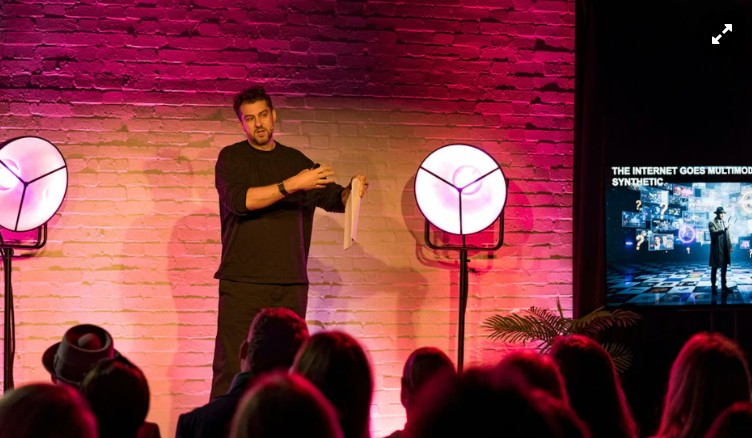
At Predictions 2026, WPP’s chief AI officer, Daniel Hulme, took the stage for a fast-paced showdown, putting his predictions against some of the world’s leading AI platforms. The session, Man v Machine, explored how AI will reshape business, roles, governance and innovation over the year ahead. Hulme drew on real-world experience to highlight where humans still outthink the machines and where the machines may already be edging ahead.
Hulme framed AI governance as an urgent priority. “Over the next several years, there will be essentially intoxicated graduates across organizations. And forgive the technical term, but it’s going to be a shit show, so what’s going to happen? There’s going to be much more emphasis on AI governance.”
He argued that while models often “regurgitate the words associated with AI governance, like safety and security and ethics,” practical oversight depends on human judgment. Hulme outlined four questions for evaluating AI. “Is the intent appropriate? Are my algorithms explainable? What happens if my AI goes very right? Have you tested your AI?” He stressed that agent verification, ensuring AI can do its job, will be crucial as companies scale deployment.
Hulme also addressed AI’s emerging scientific capabilities and the human role in maximizing them. “It’s predicted that this year we’re going to have a PhD-level [AI], so something that can actually do science, which is very exciting because we can start to apply these AIs to solve scientific problems that actually have, historically, been very, very hard.”
Yet he cautioned that technology alone is no differentiator. “There are three differentiators for an organization. The first differentiator is data, the second is talent and the third is leadership.” Without a focus on the right problems and the right people, even the smartest AI will deliver limited value.
Looking to the future, Hulme highlighted the limits of prediction and the need for human judgment. “Marketing, just like the stock market, is a second-order chaotic problem. If we can predict how people will behave, we can change their behavior. And so that prediction now becomes invalid. We must adapt rapidly to this changing world.”
Above all, Hulme stressed the limits of prediction. Marketing, he said, is a chaotic system where trying to anticipate behavior can change it entirely, making forecasts inherently fragile.
Brands that embrace this uncertainty and focus on creativity, insight and courage are the ones that will thrive. “I do predict the brands that are going to be bold, brave and distinct, they’re going to survive.”
In an era of supercharged AI, his message was clear: success will come not from outpacing machines at every turn, but from using human judgment to navigate a rapidly changing landscape.”