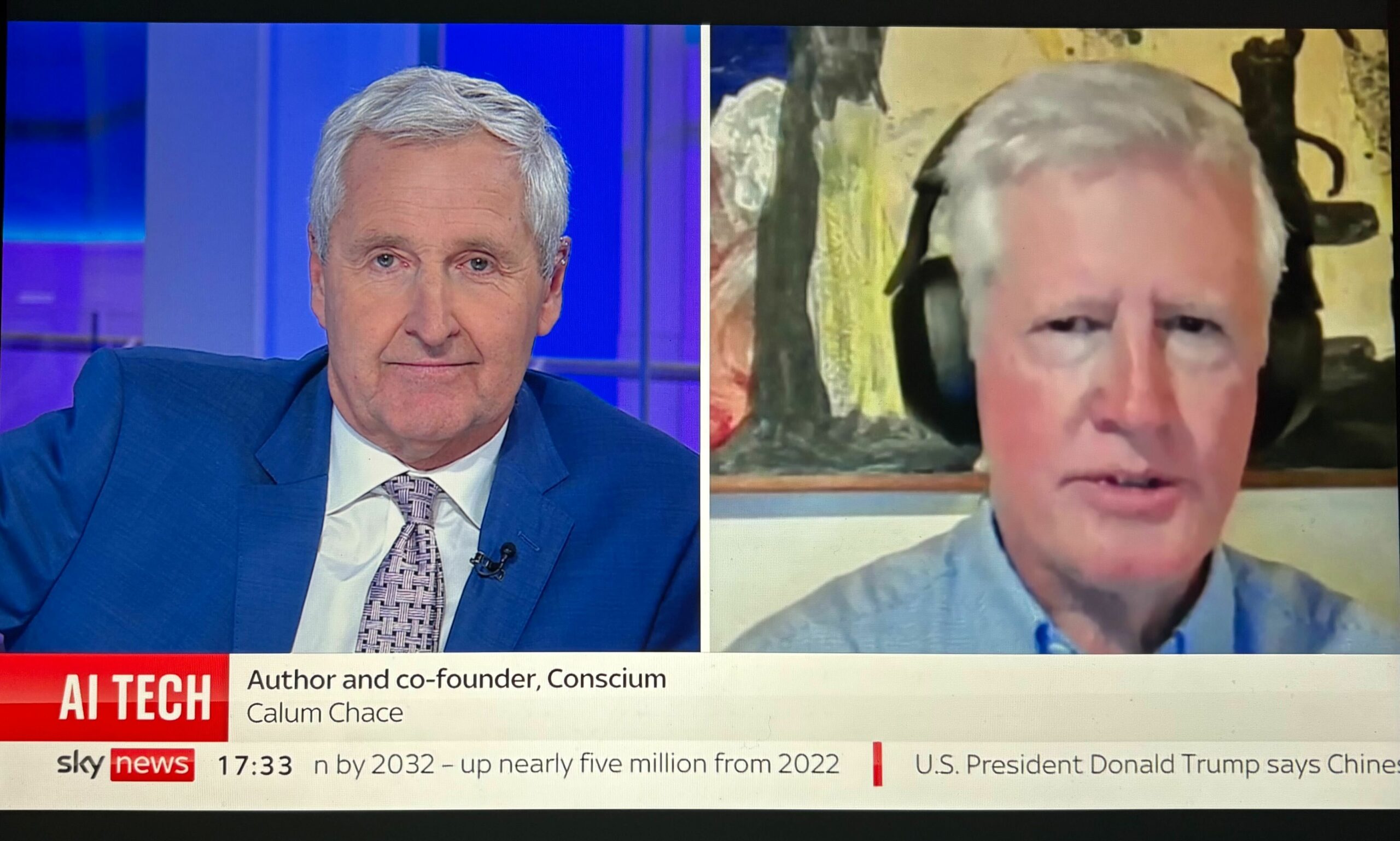
Sky News had me on to react to DeepSeek R1, the release that wiped billions off US tech stocks in a single trading session and got labelled AI's "Sputnik moment" almost overnight. My view, which I laid out on air, is that the achievement is real, but the bubble-bursting narrative that immediately attached itself to it is wrong.
What actually happened with DeepSeek R1
A Chinese lab released a reasoning model that performed competitively with the best American models, apparently trained and run at a fraction of the cost everyone assumed was necessary. Markets reacted as though the entire premise of the US AI buildout, that you need enormous capital and enormous compute to compete, had been disproven overnight. Nvidia alone lost an extraordinary amount of market value in a single day on the back of it.
Why "Sputnik moment" is the right framing, and the wrong one, at the same time
The comparison to Sputnik captures something true: this was a genuine surprise that punctured American assumptions of uncontested technological lead, the same way the Soviet satellite did in 1957. Where I think the analogy gets overextended is in what people assume follows from it. Sputnik didn't mean American technology was worthless, it meant the assumption of an unchallenged lead was wrong, and the response was to compete harder, not to conclude the space race was over. I think the same applies here. DeepSeek proved efficiency gains are possible that the market hadn't priced in, not that frontier AI development was a mistake.
Why I don't think this bursts the AI bubble
The bubble argument goes: if a Chinese lab can match frontier performance for a fraction of the spend, then the hundreds of billions being poured into American AI infrastructure look wasteful, and the whole valuation structure built on that spending should collapse. I don't buy this. Cheaper doesn't mean the demand for AI capability disappears, if anything, cheaper inference means AI gets used in more places, not fewer. The infrastructure being built isn't just for today's models, it's for the next several generations of much more capable ones, and that demand curve doesn't flatten because one lab found a more efficient training approach. What DeepSeek actually did was reset expectations about cost efficiency, not the size of the eventual market.