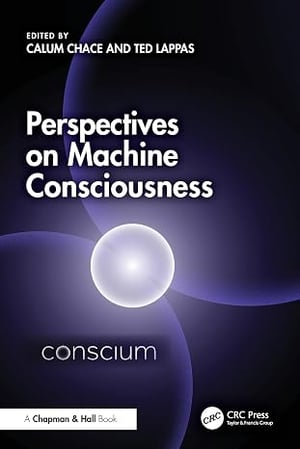

Book: Perspectives on Machine Consciousness
Perspectives on Machine Consciousness brings together 25 scientists and philosophers to ask whether artificial systems can have subjective experience, and what it would mean if they do.

Why this book, why now?
AI consciousness stopped being a niche philosophical question the moment frontier labs started taking it seriously. Anthropic created a dedicated model welfare role in 2024, and researcher Kyle Fish now leads work investigating whether Claude and similar systems might have morally relevant experiences. OpenAI's researchers and leadership have discussed the question in public interviews and essays, without landing on a settled position. Academic philosophers remain split: some, writing in journals like Nature's Humanities and Social Sciences Communications, argue there is no such thing as conscious AI even in principle. Others argue the opposite, or argue that the uncertainty itself demands caution.
Perspectives on Machine Consciousness puts 25 of these voices in one place: scientists, philosophers, and AI safety researchers who disagree with each other openly, including several who have not shared a platform before.
About the book
Perspectives on Machine Consciousness is a 26-chapter anthology edited by Ted Lappas and Calum Chace, published by Conscium, the AI safety company behind VerifyAX. The book opens with Daniel Hulme’s account of why intelligence and consciousness have been treated as one problem when they are two, and closes with Conscium’s own manifesto on why building AI capable of genuine experience may be safer than building AI that only optimises.
In between, contributors take positions that often contradict each other. Cameron Berg estimates a 25 to 35 percent probability that current frontier models have some form of conscious experience. Anil Seth argues the opposite. Susan Schneider identifies a “consciousness grey zone” that includes some hybrid computing architectures. The book does not resolve the disagreement. It puts the disagreement on the page.
A Selection of the Contributors
Contributor
Chapter
In brief

Daniel Hulme
CEO of Conscium and founder of Satalia
The Spinning Wheel
Hulme argues that intelligence and consciousness are two separate problems. He proposes that consciousness emerges from integrated adaptive control, and sets out a Consciousness Risk Rubric and a Minimal Suffering Hypothesis for the people building AI.
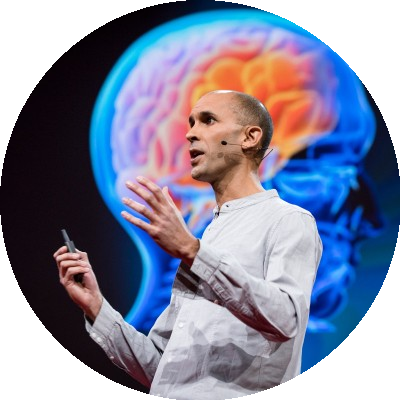
Anil Seth
Neuroscientist at the University of Sussex and author of Being You
A Sceptical View of Machine Consciousness
Seth makes the sceptical case. He ties consciousness to being a living body that works to keep itself alive, which puts machines out of reach whatever their intelligence.

Susan Schneider
Philosopher and author of Artificial You
The Quantum Darwinist Theory of Consciousness
Schneider sets out a quantum Darwinist theory of consciousness. She identifies a “consciousness grey zone” that takes in some hybrid computing architectures.

Mark Solms & Jonathan Shock
Neuropsychologist and author of The Hidden Spring, with physicist Jonathan Shock
How Could Consciousness Be Cultivated in a Machine?
Solms and Shock start from feeling. They set out how to build the simplest possible system that “gives a damn” about its own survival.

Karl Friston
Neuroscientist at UCL and originator of the free energy principle
Artificial Consciousness and the Free Energy Principle
Friston applies the free energy principle to artificial consciousness. He defines a self through Markov blankets and self-evidencing, then asks what a machine would need to meet that definition.
David Brin
Hugo and Nebula award-winning science fiction author
Selected, Blind Gropings of the Elephant of Consciousness
Brin argues that wanting, built by evolution, is the one thing AI still lacks, and the thing humans bring to any merger with it.

Cameron Berg
AI researcher studying consciousness in language models
The Evidence for AI Consciousness Today
Berg puts the probability that today's frontier models have some form of conscious experience at 25 to 35 percent. He bases the estimate on the models' internal dynamics rather than on what they say about themselves.

Calum Chace & Ted Lappas
Editors
Hear From the Contributors
Daniel Hulme on why consciousness itself may be the missing safety mechanism for superintelligent systems
David Brin on Why Wanting Is the One Thing AI Still Can't Do
Cameron Berg on the evidence for AI consciousness today
Mark Solms on Why the Brainstem, Not the Cortex, Is Where Consciousness Begins
FAQs
What is Perspectives on Machine Consciousness about?
It's a 26-chapter anthology, edited by Ted Lappas and Calum Chace, in which scientists, philosophers, and AI researchers debate whether artificial systems have or could develop conscious experience, and what that would mean for AI safety and policy.
Are today's AI models conscious?
There's no consensus. Contributor Cameron Berg estimates a 25 to 35 percent probability that current frontier models have some form of conscious experience. Others, including Anil Seth, argue machines can probably never be conscious.
Why are AI companies like Anthropic and OpenAI talking about AI consciousness?
As AI systems have become more capable, frontier labs have started taking questions about machine welfare and consciousness more seriously. Anthropic created a dedicated model welfare research role in 2024. The topic remains unsettled across the industry.
Who contributed to the book?
25 scientists, philosophers, and AI researchers, including Anil Seth, Karl Friston, Susan Schneider, David Brin, and Conscium founder Daniel Hulme.
Where can I buy the book?
Perspectives on Machine Consciousness is available on Amazon UK.